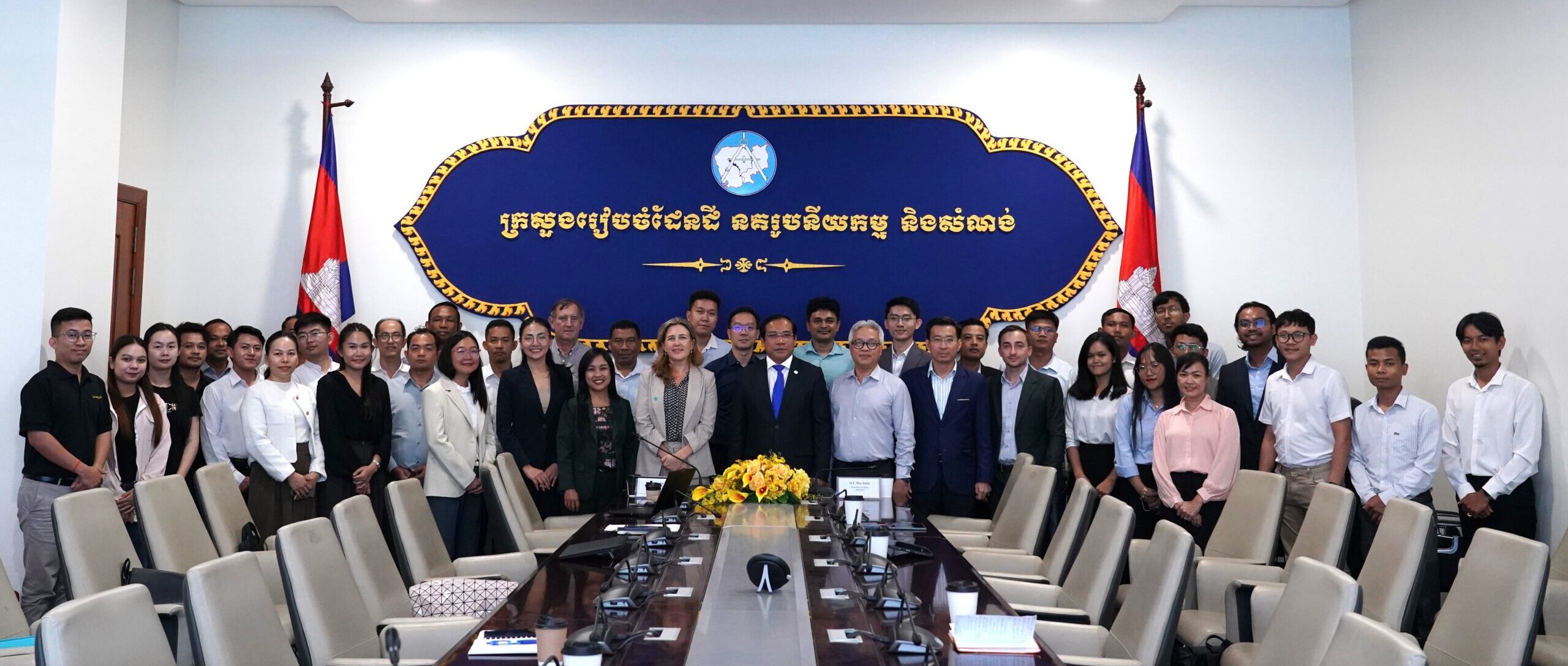
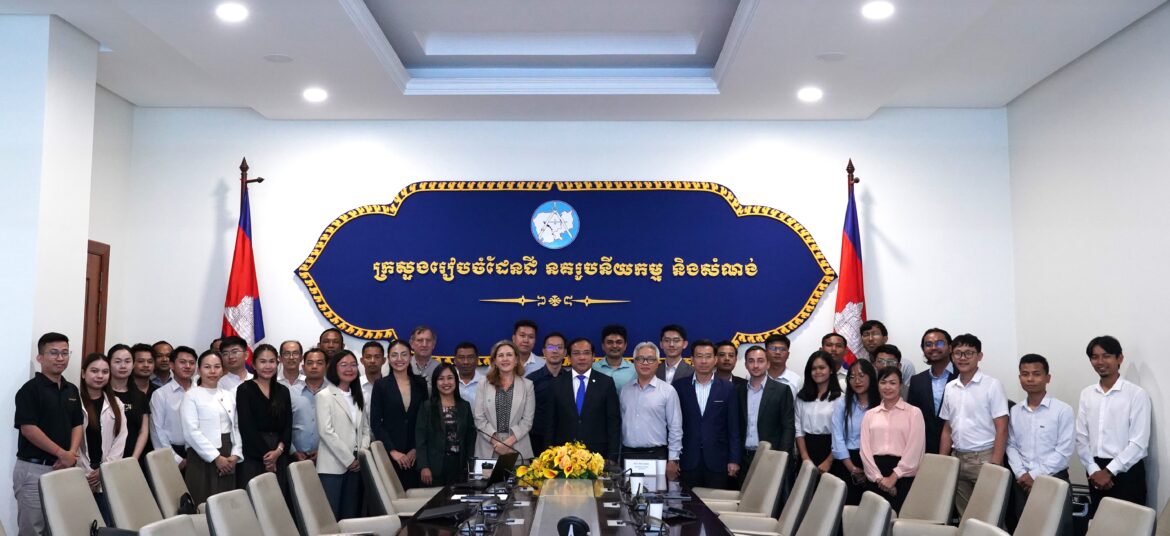
Phnom Penh, Cambodia, 22 May 2026 – The Global Green Growth Institute (GGGI), in collaboration with the Ministry of Land Management, Urban Planning and Construction (MLMUPC), convened a dissemination workshop titled “From Assessment to Action” to share key findings under the Asia Low Carbon Buildings Transition (ALCBT) project.
The event brought together around 50 stakeholders, including government officials, building developers, financial institutions, and technical experts, to discuss the results of a year-long assessment of energy use, carbon emissions, and retrofit opportunities in Cambodia’s building sector. The workshop was presided over by H.E. Ros Salin, Secretary of State, MLMUPC.
The workshop showcased major results from the project’s building energy efficiency and emission assessment, including the assessment and compilation of data from 1,235 buildings and deep-dive assessments of 250 facilities across Phnom Penh and Kandal Province. Using the Building Emission Assessment Tool (BEAT), the in-depth assessments quantified both operational and embodied carbon emissions and generated Cambodia’s Energy Performance Index (EPI) benchmarks.
Technical presentations highlighted 12 high-impact Energy Conservation Measures (ECMs) that are already available in the local market. The study identified that many recommended retrofit measures can deliver energy savings with payback periods of less than four years. These include:
- Inverter air-conditioning (AC) retrofits, with potential energy savings of up to 40% and an estimated payment period of 3.1 years;
- LED lighting upgrades, with potential savings of up to 50% and an estimated payback period of 1.6-years;
- Timer switches for water dispensers, with a payback of less than one year; and
- Behavioral changes, such as increasing AC setpoints to 24–26°C, which can reduce energy use by up to 20% at no additional cost.
To help bridge the financing gap for retrofits, the workshop also featured a dedicated session on green financing. Representatives from Mekong Strategic Capital, the Foreign Trade Bank of Cambodia, and CIMB Bank Cambodia presented financing products and opportunities to support energy efficiency and low-carbon building investments.
Mekong Strategic Capital introduced the Cambodian Climate Financing Facility (CCFF), a Green Climate Fund (GCF)-backed national climate finance vehicle offering concessional loans ranging from USD 250,000 to USD 10 million for projects that achieve at least 20% energy savings. The FTB of Cambodia shared its target to reach a 15% green loan portfolio by 2027 and introduced its upcoming energy efficiency product for building owners and enterprises, offering financing of up to USD 1 million at 5.5% interest. CIMB Bank Cambodia also presented loan options of up to USD 1 million at 5.5% interest, with a focus on supporting women-led enterprises and projects involving smart controls, thermal improvements, and efficient machinery.
The event concluded with an invitation for building owners, managers, and private stakeholders to engage with ALCBT for technical support to access green financing and implement ECMs. These efforts are expected to help reduce carbon emissions in Cambodia’s building sector.